The Key in the Door: Solving Urgency and Prolapse After 50
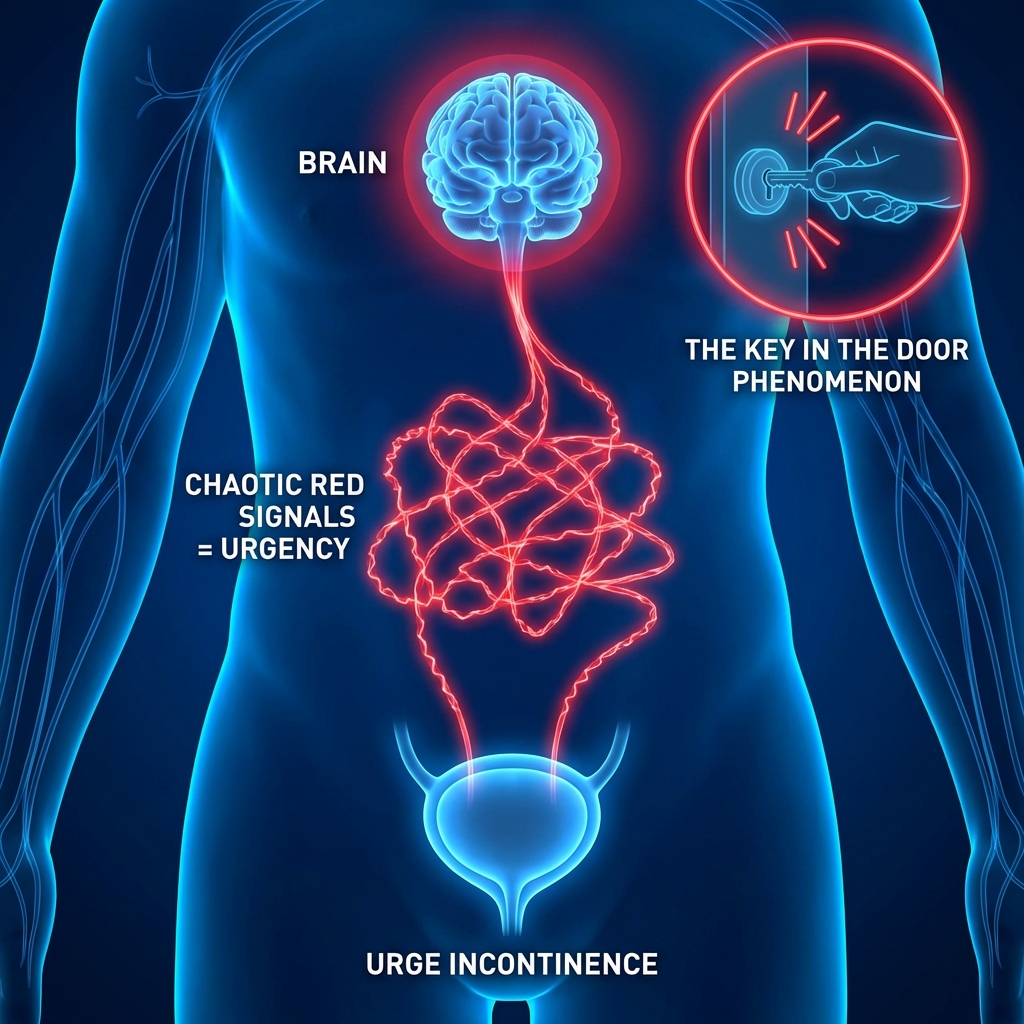
The "Key in the Door" Phenomenon
You are fine all drive home. You park the car. You walk to the door. You put the key in. Panic. Your bladder contracts violently. You rush to the bathroom, maybe leaking before you get there.
This is Urge Incontinence (or Overactive Bladder). It is distinct from the "sneezing" leak (Stress Incontinence). It is a Neurological misfire. Your brain associates "Home" with "Toilet" and triggers the release reflex too early.
The Fix: Bladder Retraining
You have to re-program the software.
- Timed Voiding: Go every 2 hours, whether you need to or not.
- The "Freeze and Squeeze": When the urge hits, DO NOT RUN to the toilet. Running jiggles the bladder wall, which increases the urge. Stop. Stand still. Squeeze your pelvic floor 5 times. Wait for the urge to subside. Then walk calmly to the toilet.
- Desensitization: You are teaching your bladder who is boss.
The prolapse (POP): "Something is Falling Out"
It feels like a tampon is stuck half-way out. Or a heaviness in the pelvis. This is Pelvic Organ Prolapse (POP).
- The Cause: The connective tissue (fascia) that holds your bladder/uterus up acts like a hammock. After menopause, the loss of estrogen makes this hammock thin and stretchy. The organs sink.
It IS Fixable (Without Surgery)
You do not always need a mesh sling (which has a scary history).
- The Pessary: A silicone device (like a structured diaphragm) that a doctor fits for you. It acts like a "scaffolding" inside the vagina to hold the organs up. You can wear it daily or just for running/hiking.
- Estrogen Cream: We keep mentioning it because it works. It thickens the fascia "hammock."
When to see a Urogynecologist
If you are designing your life around bathroom maps (where is the nearest Starbucks?), you need a specialist. A specialized Urogynecologist (not just a regular OBGYN) deals specifically with plumbing and suspension.
Conclusion
Your bladder should be a vessel, not a dictator. With nerve retraining and structural support, you can take back the control.