Positive Birth Experience: Stages of Labor & Pain Management

It's Go Time!
The moment you have prepared for is here. Birth is intense, primal, and often unpredictable. The best way to reduce fear is to understand the physiology of what is happening.
The standard rule for going to the hospital: 5-1-1.
- 5 Minutes Apart: Frequency of contractions.
- 1 Minute Long: Duration of each squeeze.
- 1 Hour: This pattern persists for at least an hour.
Part 1: The 4 Stages of Labor
Stage 1: The Dilation Marathon (0-10cm)
This stage is divided into three phases.
- Early Labor (0-6cm):
- What it feels like: Period cramps. You can talk through them.
- Action: Stay home. Eat, sleep, watch a movie. Going to the hospital too early increases the risk of unnecessary interventions (the "cascade of interventions").
- Active Labor (6-8cm):
- What it feels like: You can no longer talk during a contraction. You need to focus/breathe.
- Action: Go to the hospital.
- Transition (8-10cm):
- What it feels like: The "I can't do this" stage. Intense pressure. You might shake uncontrollably (hormone dump) or vomit.
- Mantra: "This is the shortest part." It means the baby is almost here.
Stage 2: The Pushing Phase
- Duration: 20 mins to 3 hours.
- The Urge: You will feel the "Fetal Ejection Reflex"—an uncontrollable urge to bear down, like having a bowel movement.
- Laboring Down: If you have an epidural, ask to "labor down." This means engaging the baby lower with contractions before you start actively pushing. It saves energy.
- Positioning: Lying on your back (lithotomy) closes the pelvic outlet by 20%. Try side-lying or hands-and-knees to give baby more room.
Stage 3: The Placenta
- After the baby is out, you still have to birth the organ that sustained them.
- It is soft and usually comes out with one small push.
- Pitocin: Standard care is a shot of Pitocin to clamp the uterus down and prevent hemorrhage.
Stage 4: The Golden Hour (Recovery)
- Skin-to-Skin: Essential. It regulates baby's temperature, glucose, and heart rate better than an incubator.
- Breast Crawl: Placed on the chest, a baby will naturally find the nipple and latch within 60 minutes.
Part 2: Pain Management Options
There is no medal for suffering. You do what makes you feel safe.
Pharmacological (Medical)
- Epidural:
- Pros: Complete pain relief (usually). You can sleep.
- Cons: Restricts movement (you are bed-bound with a catheter). Can lower blood pressure (baby's heart rate might drop). May lengthen the pushing stage.
- Nitrous Oxide (Laughing Gas):
- Pros: You hold the mask. It doesn't numb pain, but makes you "not care" about it. Leaves body instantly.
- Cons: Can cause dizziness/nausea.
- IV Narcotics:
- Pros: Takes the edge off in early labor.
- Cons: Makes you and baby sleepy. Cannot be given close to birth (risk of respiratory depression in baby).
Non-Pharmacological (Natural)
- Hydrotherapy: Water is "nature's epidural". A warm shower or tub reduces muscle tension significantly.
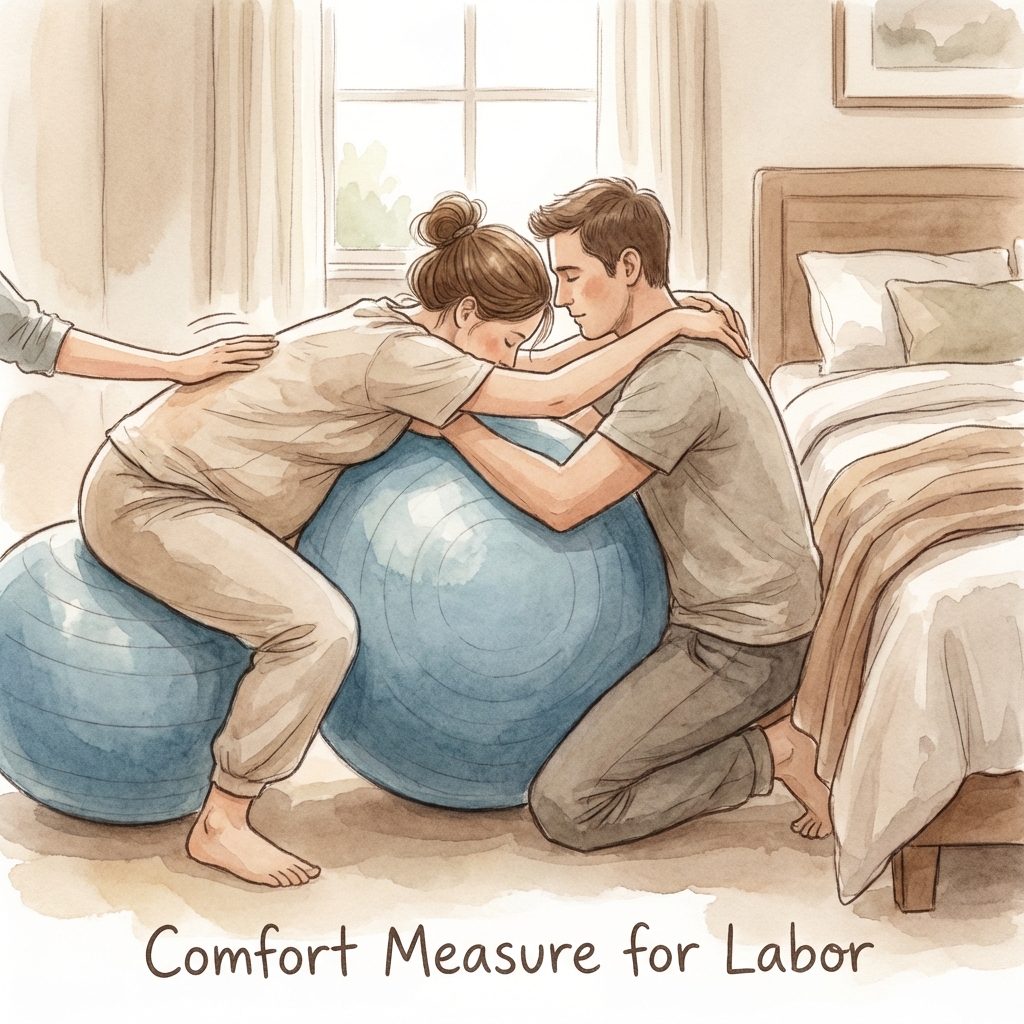
- Counter Pressure: Partner pushes hard against your sacrum (tailbone) during contractions. Essential for "Back Labor".
- The Comb Trick: Squeeze a plastic comb in your palm. The brain can't process the hand pain and contraction pain simultaneously (Gate Control Theory).
Part 3: C-Section Recovery
Whether planned or emergency, a C-section is major abdominal surgery.
- The Incision: Splint it with a pillow when you cough, laugh, or sneeze.
- Gas Pains: Often worse than the incision pain. Walking (even slowly) is the only cure.
- Scar Massage: After 6 weeks (when healed), massage the scar to break up adhesions and prevent the "shelf" look.
Part 4: The Fourth Trimester (Postpartum)
The first 12 weeks after birth are about healing.
🩹 Physical Healing
- Use the Peri Bottle: Warm water while peeing prevents stinging.
- Ice Packs: "Padsicles" (pads with aloe and witch hazel, frozen) are heaven.
- Bleeding: Lochia lasts 4-6 weeks. It usually stops being red after week 2.
🧠 Mental Health (Baby Blues vs. PPD)
- Baby Blues: Crying over spilled milk. Lasts 2 weeks. Normal hormone crash.
- PPD (Postpartum Depression): Unable to bond, feel worthless, scary intrusive thoughts. Call your doctor immediately.
🤱 Breastfeeding Reality
- It is natural, but it is a learned skill. It often hurts for 2 weeks.
- The Latch: Should be asymmetrical (more areola from the bottom). "Nipple to nose."
- Fed is Best: If breastfeeding destroys your mental health, formula is a miracle of science. A happy mom matters more than breastmilk.
Final Words
You were built for this. Trust your intuition. You are ready.
Advertisement - Recommended for You