Why Do They Hurt? Cyclical Breast Pain in Your 20s
The Monthly Heavyweights
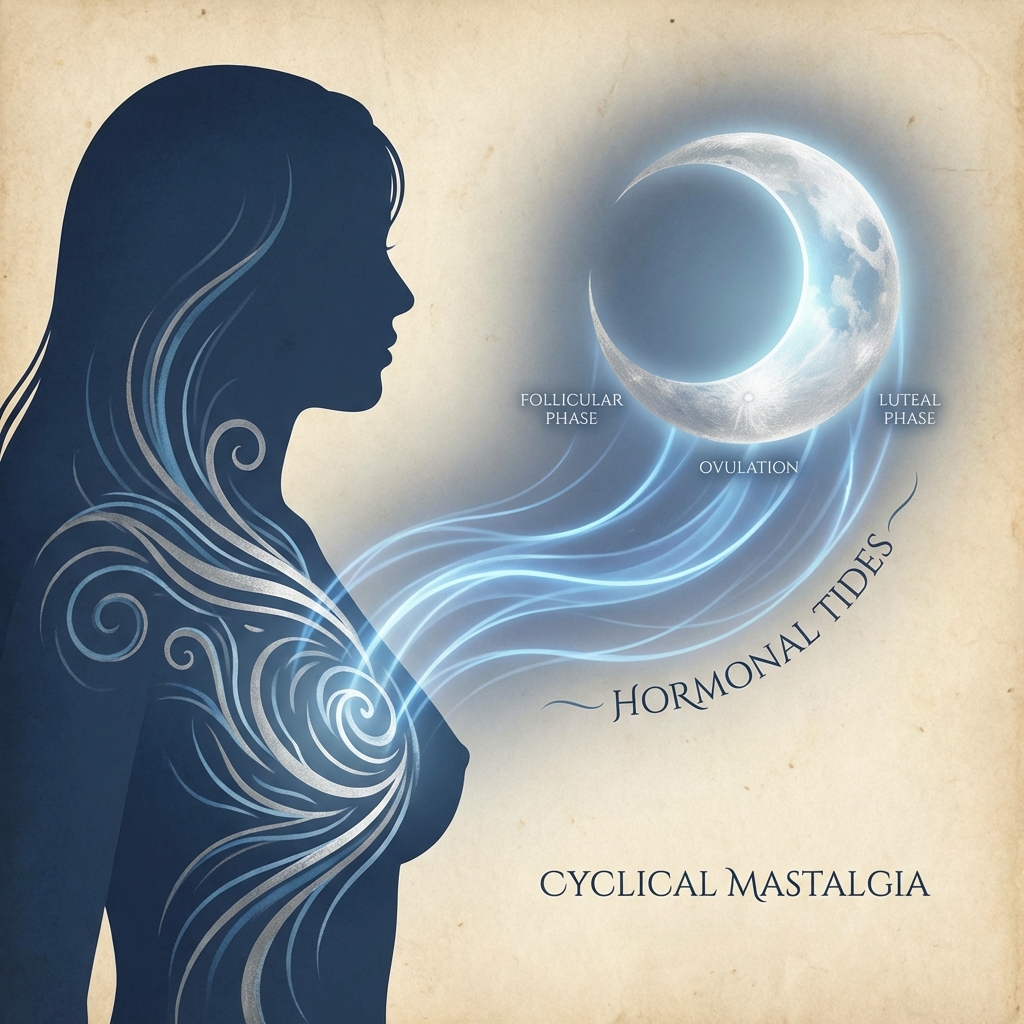
It’s Day 21 of your cycle. You take off your bra and... ouch. Your breasts feel two sizes bigger, "ropey" to the touch, and painfully sensitive. Then your period starts, and the pain vanishes. This is Cyclical Mastalgia. And it is happening because your breasts are doing their job too well.
1. The Estrogen Tide
Your breast tissue is the "target organ" for Estrogen and Progesterone.
- Day 1-14 (Follicular Phase): Estrogen signals the milk ducts to grow.
- Day 15-28 (Luteal Phase): Progesterone signals the milk glands (lobules) to swell in preparation for a potential pregnancy.
- The Result: Fluid retention. If you have "Fibrocystic Tissue" (lumpy/dense tissue, which 50% of women do), this fluid gets trapped in cysts, causing pressure and pain.
2. The Caffeine Trigger
We hate to say it, but your latte is hurting you. Methylxanthines (found in coffee, tea, and chocolate) cause blood vessels in the breast to dilate and fluid to accumulate.
- The Experiment: Cut caffeine completely for ONE cycle. Just one. 80% of women report a significant drop in tenderness.
3. The Iodine Deficiency
Your thyroid needs iodine, but so do your breasts. Iodine acts as an antioxidant in breast tissue, reducing fibrosis (toughness) and cysts.
- The Fix: Add Seaweed salad (Wakame) to your diet or take a molecular iodine supplement (like Violet).
4. When to Worry (The Red Flags)
Cyclical pain (both sides, comes and goes) is almost never cancer. Non-Cyclical Pain (one spot, doesn't go away) needs checking.
- Skin Changes: Dimpling (looking like an orange peel).
- Nipple Changes: Inversion or bloody discharge.
- The Lump: Determine if it moves. A fibrocystic lump moves like a grape in water. A malignant lump often feels fixed like a stone in the dirt.
- Note: Always get a doctor to check any lump.
Conclusion
Your breasts are sensitive barometers of your hormonal health. Treat the tenderness with Vitamin E (400 IU), Primrose Oil, and maybe a little less espresso.