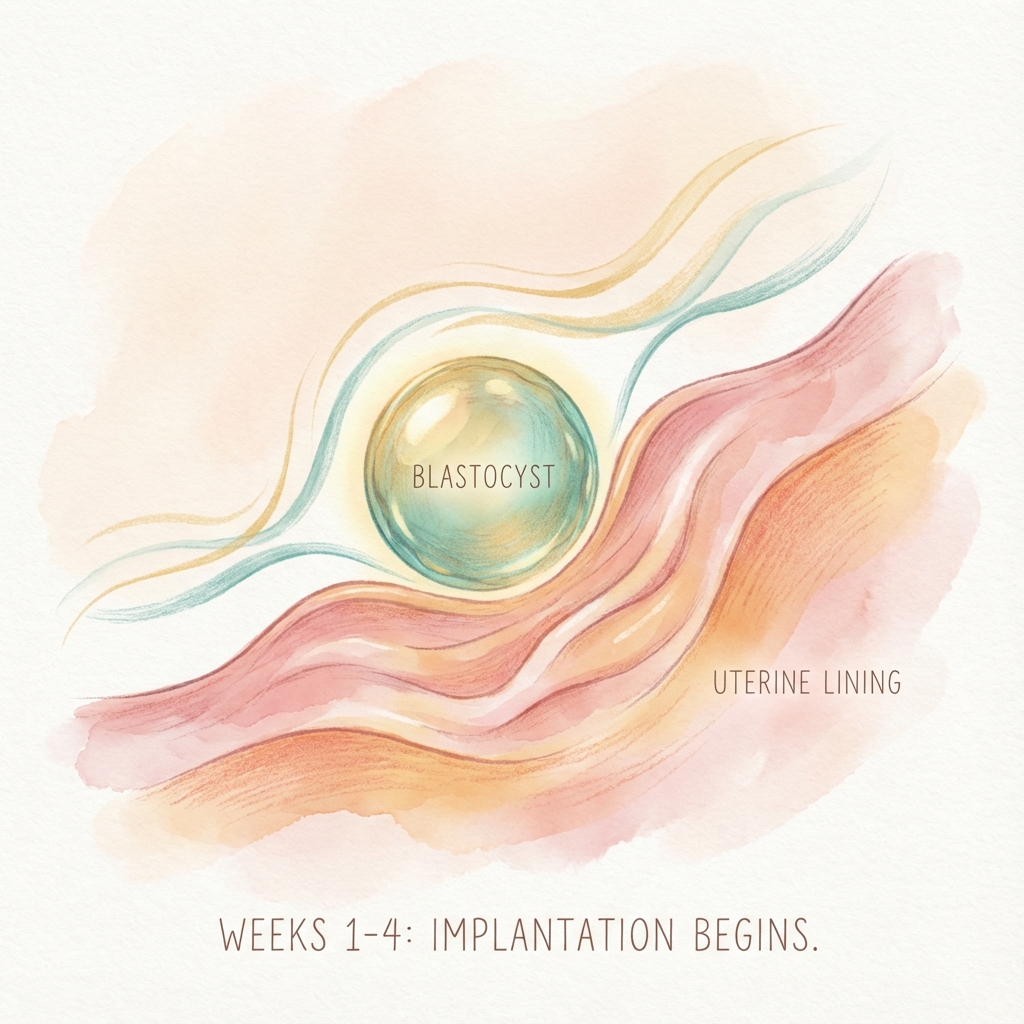
First Trimester Survival Guide: Morning Sickness, Scans & Nuance
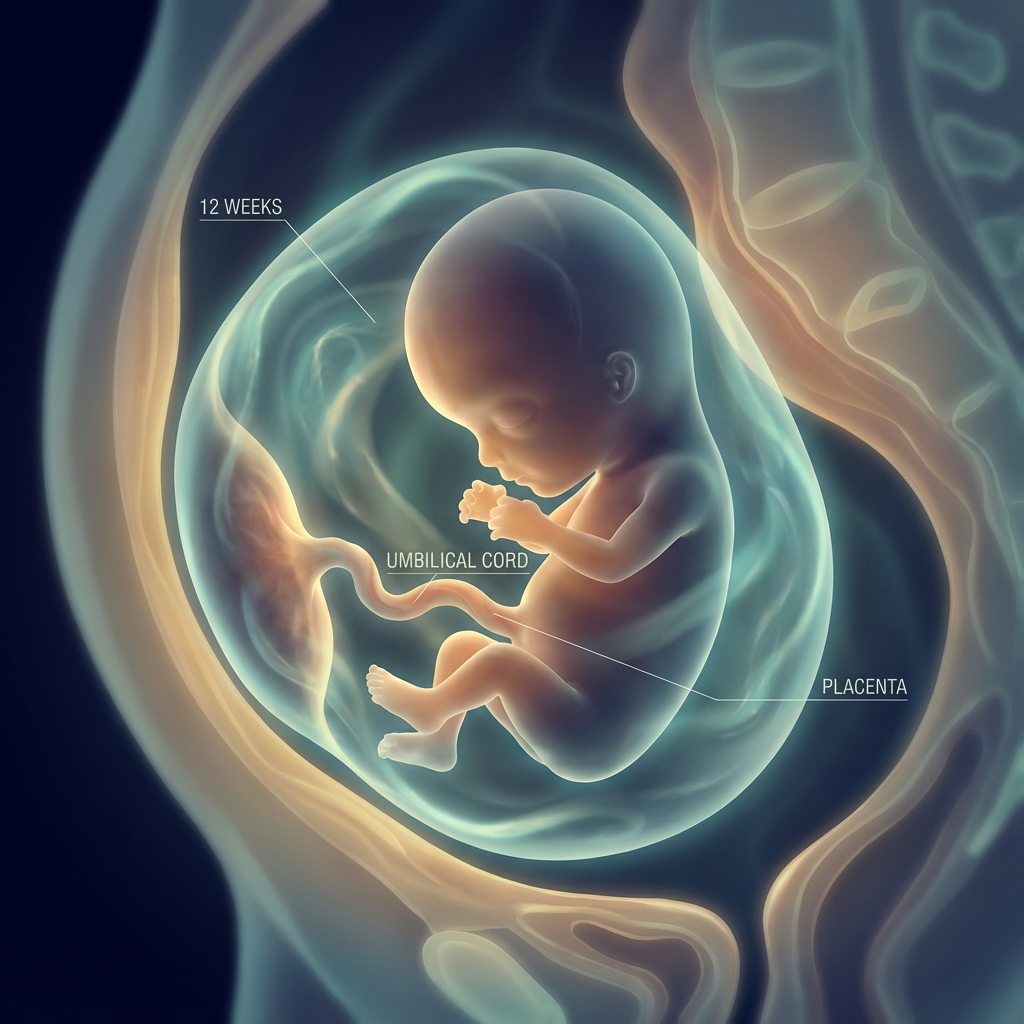
The "Invisible" Marathon
Welcome to the First Trimester. You might not look pregnant, but your body is doing the hardest work of the entire 9 months: building the placenta and forming every single organ your baby needs from scratch. Your Basal Metabolic Rate (BMR) skyrockets, which explains why you are exhausted enough to sleep on a concrete floor.
This comprehensive guide covers everything from the debilitating nausea to the anxiety of "waiting for the safe zone."
Part 1: Week-by-Week Deep Dive
Week 5: The Spark
- Baby: Size of an appleseed. The neural tube (brain/spinal cord) is closing right now.
- You: You might just have a missed period. Or you might feel like you have the flu.
- Science: The yolk sac is currently feeding the baby while the placenta forms.
Week 6: The Heartbeat
- Baby: Size of a sweet pea. The heart starts beating around 110-160 bpm. It’s tiny but furious.
- You: "Morning" sickness often hits like a truck. Food aversions are real.
- Tip: If you can't stand the smell of your kitchen, banish yourself. Cooking smells are the #1 trigger.
Week 8: The Gummi Bear
- Baby: Size of a kidney bean. Fingers and toes are un-webbing. It looks like a tiny gummy bear.
- You: Bloating. Your uterus is expanding to the size of a grapefruit, pushing your intestines up and out. Hello, "Endo Belly" look-alike.
Week 10: The Embryo Graduates
- Baby: Size of a prune. Officially a "Fetus". Most critical development is done; now it's about growth.
- You: HCG levels peak here. This is often the peak of nausea. Hang in there.
Week 12: The Light at the End
- Baby: Size of a lime. Kidneys are working (baby is peeing!).
- You: The placenta takes over hormone production. For many, nausea begins to fade.
Part 2: Mastering Hyperemesis & Nausea
Let's distinguish between "morning sickness" and Hyperemesis Gravidarum (HG).
- Morning Sickness: Nausea, vomiting 1-2 times a day, can keep fluids down.
- HG: Vomiting >3 times a day, weight loss, dehydration. This requires medical intervention.
The Advanced Survival Toolkit
- The "Empty Stomach" Rule: Acid makes nausea worse. Never let your stomach get completely empty. Keep saltines on your nightstand. Eat before you lift your head off the pillow.
- Unisom + B6 Protocols:
- Vitamin B6: 25mg, 3 times a day.
- Doxylamine (Unisom): 1/2 tablet at night. It helps you sleep and curbs next-day nausea.
- Note: Always check with your provider.
- Protein Anchors: Carbs (toast) settle the stomach, but Protein (cheese, nuts) keeps blood sugar stable. The "cycle of nausea" is often a blood sugar crash.
- Temperature Therapy: Some women find ice-cold drinks help; others need warm broth. Extremes often work better than room temp.
Part 3: The Science of Screening (NIPT & NT)
Technology in 2026 allows us to know so much, so early.
The Dating Ultraound (8-10 Weeks)
- Goal: Confirm heartbeat (viability) and measure the "Crown Rump Length" (CRL) to determine your Due Date.
- Reality Check: It is a transvaginal ultrasound. It’s not glamorous, but it’s the best way to see the tiny bean.
NIPT (Non-Invasive Prenatal Testing)
- What it is: A simple blood draw from your arm. It analyzes "Cell-Free DNA" (cfDNA)—fragments of the baby's placenta floating in your blood.
- Accuracy: >99% for Down Syndrome (Trisomy 21), Trisomy 18, and Trisomy 13.
- The Gender: It looks for Y chromosomes. If Y is present = Boy. If no Y = Girl.
- When: Anytime after 10 weeks.
- Cost: Insurance often covers it for women >35. For others, cash prices range from $99-$299 depending on the lab (Natera, MaterniT21, etc.).
Part 4: Mental Health & "Baby Brain"
It's not just a joke; your brain actually changes.
- Gray Matter: Studies show a reduction in gray matter volume in social cognition areas. Scientists believe this "pruning" makes you more efficient at reading your baby's non-verbal cues. You are losing "useless" info to make room for "survival" info.
- The Anxiety: The odds of miscarriage drop significantly after seeing a heartbeat (to <5%).
- Depression: Pre-partum depression is real. If you feel numb, disconnected, or rageful (not just sad), tell your midwife.
Part 5: Relationship Survival
The first trimester is hard on partners too.
- The Disconnect: You feel sick and exhausted. He sees nothing different. The baby isn't "real" to him yet.
- Libido: Yours might plummet (nausea is not sexy). Or it might spike due to blood flow. Both are normal.
- Advice: Explain the "Spoon Theory". You start the day with 5 spoons of energy. Work takes 3. Showering takes 1. You have 1 spoon left for the relationship. Be honest about your capacity.
Part 6: Nutrition - "Survival Mode"
Forget the Instagram salads. If you are surviving on buttered noodles, that is fine.
- Folate: Keep taking that prenatal. It matters more than the broccoli right now.
- Hydration: If you vomit, you lose electrolytes. Coconut water, Pedialyte, or bone broth are essential. Dehydration causes uterine irritability (cramps).
- Aversions: Listen to them. If chicken smells like death, don't force it. Your body might be rejecting potential pathogens (an evolutionary theory).
FAQ: First Trimester
Q: Is spotting normal? A: Yes. The cervix is highly vascular and sensitive. Sex or an exam can cause spotting. Brown blood = old blood (safe). Bright red + cramps = call doctor.
Q: Can I dye my hair? A: Most experts say wait until the Second Trimester, or use ammonia-free dye in a well-ventilated room.
Q: When should I tell people? A: The old rule was "wait for 12 weeks". The new rule: Tell people who would support you through a loss. If you miscarried, would you want support or privacy? That is your answer.