Fueling the Fight: Nutrition & Lifestyle During Treatment (2026 Guide)
The Power on Your Plate
"What can I eat?" is the #1 question patients ask. Food is more than fuel; it is code. It tells your genes what to do. During treatment, your body is a construction site. It needs bricks (protein), mortar (fats), and workers (micronutrients) to rebuild.
This guide separates 2026 science from internet myths.
Part 1: The "Sugar Feeds Cancer" Myth (Debunks)
You will hear this everywhere. Let's clarify.
- The Myth: Eating a piece of fruit will make your tumor explode.
- The Truth: All cells, healthy and cancerous, run on glucose. You cannot "starve" cancer without starving your brain and heart.
- The Nuance: What does drive cancer is Insulin Growth Factor (IGF-1). When you eat refined sugar (cake, soda, white bread), your insulin spikes. High insulin tells cells to "Grow! Divide!" That is what we want to avoid.
- The Strategy: Don't fear fruit. Do fear High Fructose Corn Syrup. Pair carbs with protein/fat (e.g., Apple + Almond Butter) to blunt the insulin spike.
Part 2: Anti-Angiogenesis (Starving the Tumor's Blood Supply)
Dr. William Li's research on "Angiogenesis" shows that we can eat foods that block tumors from growing the new blood vessels they need to survive.
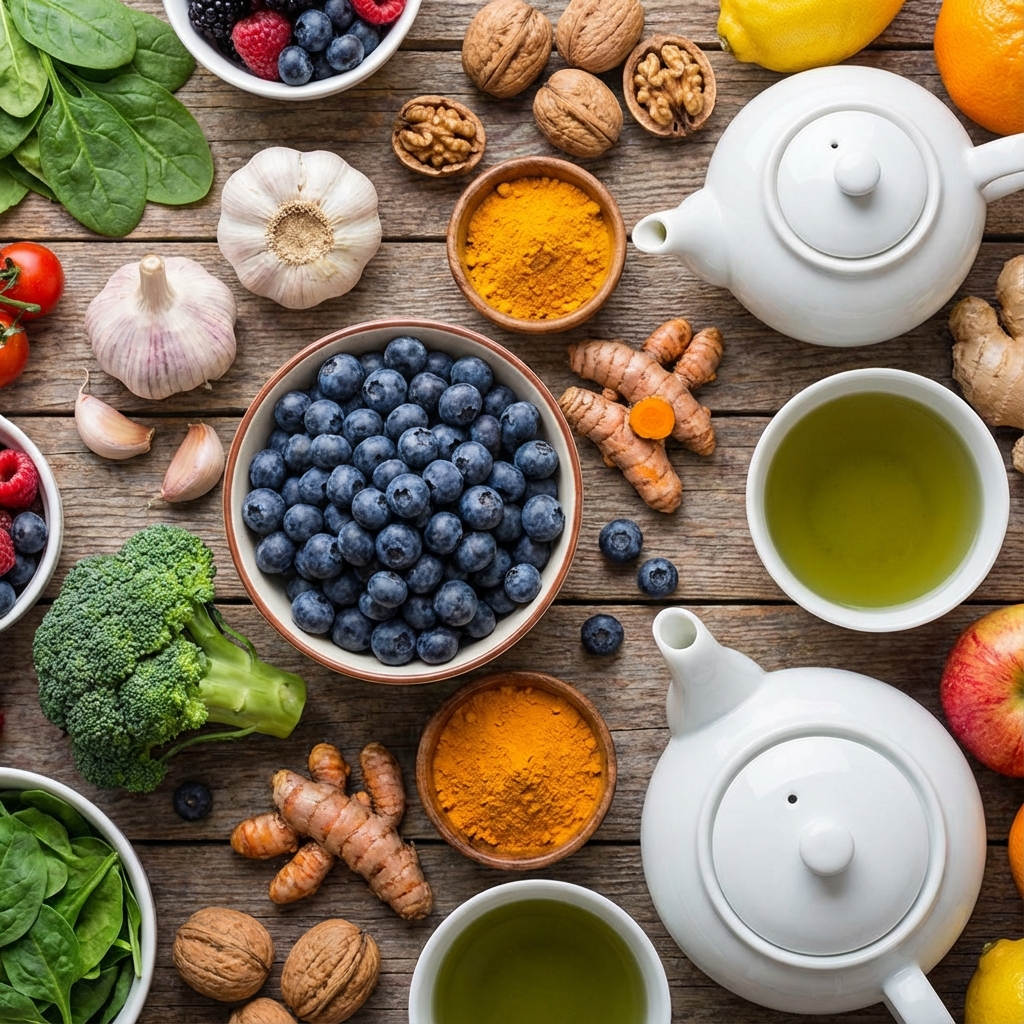
The Top Cancer-Fighting Foods
- Cruciferous Vegetables: Broccoli, Cauliflower, Brussels Sprouts, Kale.
- The Magic: They contain Sulforaphane, which activates the body's detoxification pathways.
- Tip: Chop them 40 minutes before cooking to activate the enzyme.
- Berries: Blueberries, Blackberries, Raspberries.
- The Magic: Ellagic Acid and Anthocyanins. They protect DNA from damage.
- Turmeric: Needs Black Pepper to be absorbed.
- The Magic: Curcumin is a potent anti-inflammatory.
- Green Tea: specifically Matcha.
- The Magic: EGCG. It stops cancer cells from dividing.
- Mushrooms: Reishi, Turkey Tail, Maitake.
- The Magic: They boost Natural Killer (NK) cell activity.
Part 3: What to Eliminate (The "No-Go" List)
- Alcohol: This is non-negotiable. Alcohol increases circulating estrogen levels. It is a Class 1 Carcinogen. If you are in treatment or recovery, aim for zero.
- Processed Meats: Bacon, Salami, Hot Dogs. The nitrates are carcinogenic.
- Vegetable Oils: Soybean, Corn, Canola oil. These are high in Omega-6 (inflammatory). Switch to Olive Oil and Avocado Oil (high in Omega-9).
The Soy Controversy
- Old Thinking: Soy contains phytoestrogens, so it causes cancer.
- New Thinking (2026): Whole Soy (Edamame, Tofu, Tempeh) is safe and actually protective. It blocks the stronger human estrogen from binding to receptors.
- Caution: Avoid Processed Soy Isolate (found in fake meats and protein bars).
Part 4: Fasting & Chemotherapy
Emerging research suggests that Intermittent Fasting can reduce chemo side effects.
- The Mechanism: When you fast, healthy cells go into "hibernation mode" (protection). Cancer cells, which are dumb/mutated, keep trying to grow. When the chemo hits, the hibernation protects the healthy cells, but the cancer cells take the full hit.
- The Protocol: Many patients fast for 13-16 hours overnight.
- Chemo Fasting: Some fast for 24 hours before infusion. Always check with your oncologist before trying this.
Part 5: Hydration & Supplements
Chemo is dehydrating. You need to flush your kidneys.
- Target: 3 Liters of water a day.
- Electrolytes: Add a pinch of sea salt or lemon.
Supplements: Be Careful
Antioxidants (Vitamin C, E) can theoretically protect cancer cells from chemotherapy (which uses oxidation to kill them). Stop all high-dose antioxidants during chemo unless your doctor says otherwise.
- Safe/Recommended: Vitamin D3 (keep levels above 50 ng/mL), Magnesium.
Conclusion
You don't have to be perfect. Aim for the "80/20 Rule." 80% of the time, eat to kill cancer. 20% of the time, eat for your soul. Every time you choose a salad over a sandwich, you are casting a vote for your body's ability to heal.